Diabetic Diet
: Plate Method, Indian Meal Tips & Online Doctor Help from ₹500
Not sure what to eat with diabetes or high sugar? Learn the plate method, simple changes to everyday Indian meals, and how food timing fits with your medicines. Then talk to a diabetologist online, 10 AM-6 PM, usually connecting within 1 hour of payment.
What Is a Diabetic Diet and Who Needs One?
A diabetic diet is a healthy-eating plan built on nutrient-rich foods in moderate amounts at regular mealtimes. It centres on non-starchy vegetables, lean protein, whole grains and measured carbohydrates, so blood sugar stays steadier. You do not need special 'diabetic' foods; the plan is tailored to your health goals, medicines and lifestyle.
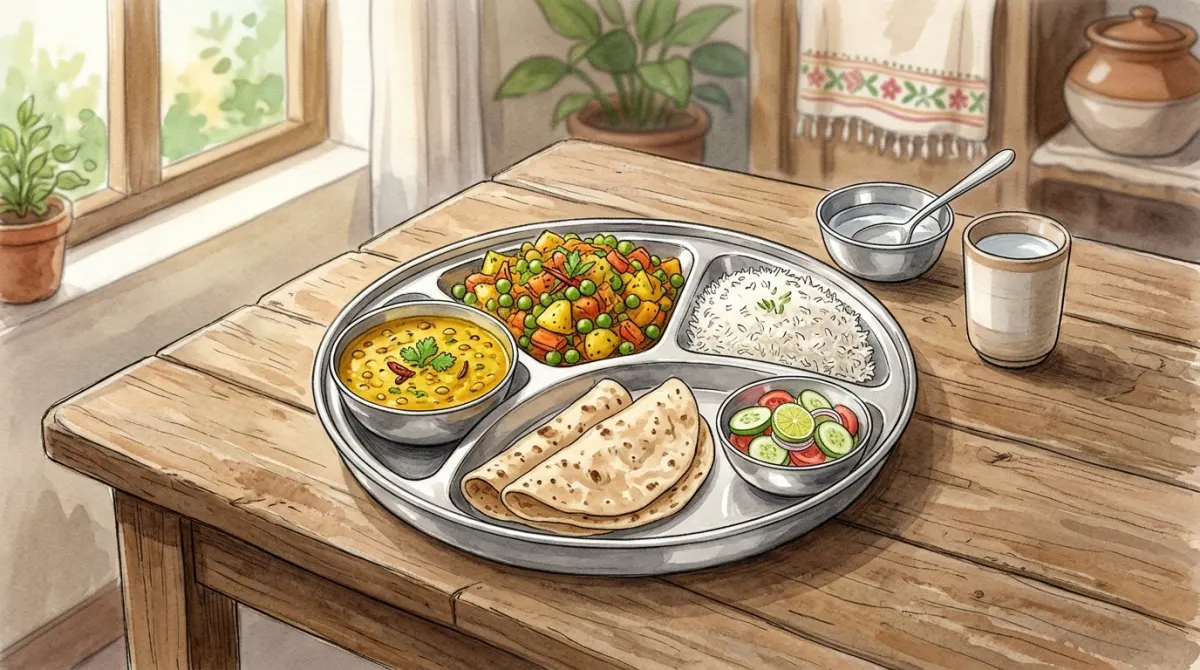
A diabetic diet is not a special menu or a list of banned foods. It means eating the healthiest foods in moderate amounts. You also need to stick to regular mealtimes. The American Diabetes Association says a healthy meal plan for people with diabetes is generally the same as healthy eating for anyone. What changes is how carefully you watch portions, carbohydrates and timing.
This way of eating helps people with type 1 diabetes, type 2 diabetes and prediabetes. If you have prediabetes or are at risk, choosing foods that keep blood glucose healthy may help prevent type 2 diabetes later on. The need is large in India. The ICMR-INDIAB study, which covered 113,106 people, found a diabetes prevalence of 9.6%.
Your plan should fit you. A doctor or dietitian looks at your weight, medicines, lifestyle and goals before suggesting changes. Someone eating rice three times a day in Chennai and someone eating roti with sabzi in Jaipur need different adjustments. A generic chart from the internet cannot see your readings, your medicines or your daily routine.
Food is one part of care, alongside medicines when prescribed and regular follow-up. If blood sugar stays high for a long time, it may lead to nerve, kidney and heart damage. No diet or supplement cures diabetes; management is a long-term process. This page covers the basics, the plate method, Indian meal adjustments and when to speak to a diabetologist.
Who Can Help With a Diabetic Diet?
Each professional covers a different part of eating well with diabetes.
How Do You Build a Diabetes-Friendly Meal Plan?
From how food affects sugar to Indian plates, timing and when to ask a doctor.
How Does Food Affect Blood Sugar in Diabetes?
What you eat and when you eat both shape your blood sugar. Carbohydrates are the nutrient most meal plans track, which is why you will be asked to note the carbohydrates in each meal or snack. Regular mealtimes help keep things steady. If high sugar continues for a long time, it can lead to nerve, kidney and heart damage, so everyday choices matter over years, not just one meal. Food works alongside your medicines and activity. It does not replace them.
What Foods Should You Eat With Diabetes?
Build meals around vegetables, whole grains, fruit, lean protein and healthy fats. Whole wheat, brown rice, barley, quinoa and oats are common whole-grain choices. In an Indian kitchen, that can mean sabzis and salads, dal, eggs, fish, paneer or tofu, with roti or rice in a measured portion. Fruit is not forbidden. Some fruits contain more sugar than others, but that does not mean you cannot eat them. Ask your doctor which fruits and how much suit you.
What Foods and Drinks Should You Limit or Avoid?
Foods and drinks that are high in sugar, refined carbohydrates or heavy processing are the ones usually limited. Sweetened drinks and mithai are the clearest examples. Limiting is not the same as never. A plan you can follow at weddings and in office canteens works better than a strict list you drop within a week. Ask your diabetologist what is realistic for you, especially if you take diabetes medicines.
| Limit | Why | Easier swap |
|---|---|---|
| Sweetened chai, cold drinks, packaged juice | High in sugar | Water, plain chaas, tea without sugar |
| Maida, white bread, biscuits | Refined carbohydrates | Whole-wheat roti, oats, whole grains |
| Samosa, namkeen, chips | Fried and processed | Roasted chana, sprouts, a small handful of nuts |
| Mithai and desserts | High in sugar | A small portion occasionally, as your doctor advises |
How Does the Plate Method Help With Portion Control?
The plate method is a simple visual way to balance a meal. Picture your plate, or your thali, divided into three parts. It works for home food, tiffin boxes and restaurant meals alike, and you do not need a weighing scale. You can still track carbohydrates on top of this, and your doctor or dietitian can turn portions into household measures such as katoris and rotis for you.
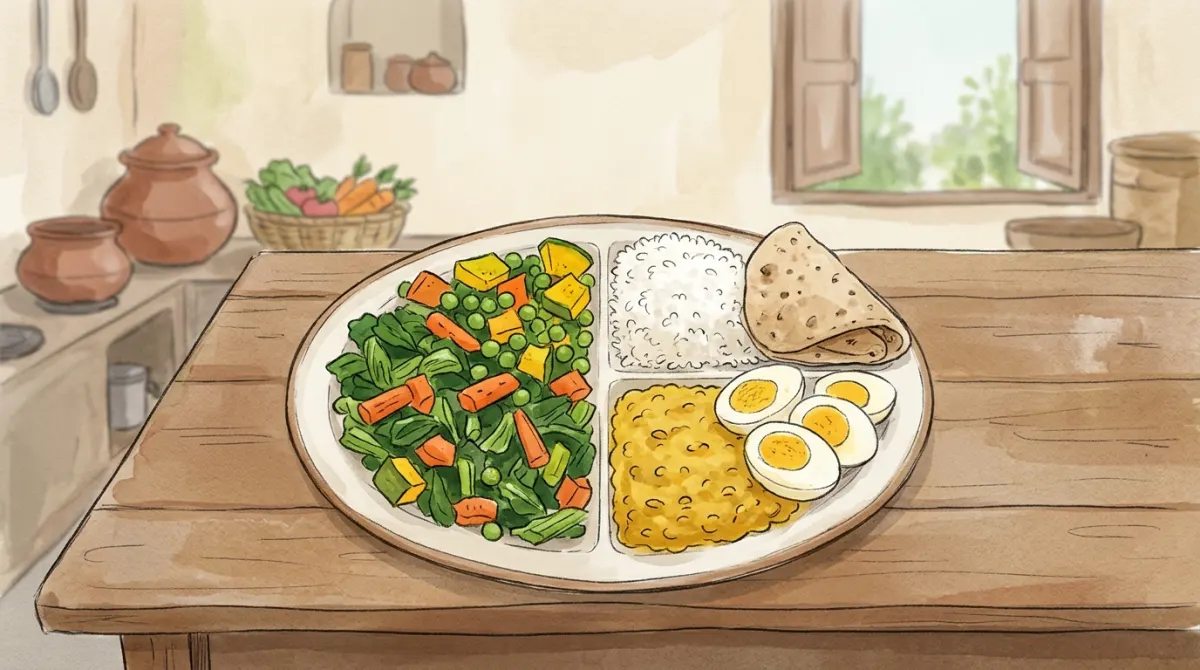
- Picture the plate in three parts — Imagine one half and two quarters on your thali or plate.
- Fill half with non-starchy vegetables — Sabzi, salad, leafy greens and similar vegetables go here.
- Fill one quarter with lean protein — Dal, eggs, fish, paneer, tofu or skinless chicken fit this space.
- Fill one quarter with carb foods — Roti, rice or other grains go in this space, in a measured portion.
How Can You Adjust Everyday Indian Meals for Blood Sugar Control?
You rarely need to give up your food. You usually need to rebalance it. Most Indian meals lean heavily on rice or roti, with a small spoonful of sabzi. The plate method flips that, so vegetables and dal get more space. Metro habits matter too: late dinners, food-delivery orders and long desk hours all affect your routine, so mention them to your doctor. Festive eating needs a plan, not guilt.
| Meal or habit | What to adjust |
|---|---|
| Roti or rice | Keep it to the carbohydrate quarter; pair with sabzi and dal |
| Dal | Counts as protein; add a vegetable sabzi on the side |
| Breakfast such as poha, upma or paratha | Add vegetables and a protein such as egg, sprouts or curd; watch the portion |
| Chai or coffee | Reduce or skip the sugar |
| Evening snack | Roasted chana, makhana, sprouts or nuts instead of biscuits or namkeen |
| Weddings and festivals | Fill the plate by the plate method first, then take a small portion of sweets |
How Does Meal Timing Affect Diabetes Medicines?
Regular mealtimes are part of any diabetes eating plan. If you take diabetes medicines, such as insulin or oral hypoglycemics, timing matters even more. Food and medicine work together to avoid high or low blood sugar levels. Ask your doctor how your meals should line up with your tablets or injections, and what to do if a meal is delayed or missed. Please do not change a dose on your own. A doctor can prescribe medicines only after assessment.
When Should You See a Diabetologist About Your Diet?
A general plan is a fine start, but some situations need a doctor. A diabetologist can review your readings, check whether medicines need adjusting and refer you for tests. A provider will also assess your weight, medicines, lifestyle and goals. Book sooner rather than later if your sugars stay high despite changing your food, or if you notice the symptoms below. For type 2 diabetes in general, see our type 2 diabetes guide; for earlier-stage sugar problems, see prediabetes help.
How Should You Prepare for an Online Diabetes Diet Consultation?
A little preparation makes a short consultation far more useful. A food diary is the single most helpful thing you can bring, as it is important to keep track of the carbohydrates in each meal or snack. Your doctor can then see what you actually eat, instead of guessing from a general description. For a deeper look at diet-focused visits, see our page on online diabetes diet consultation.
- A food diary of three or more typical days, with carbohydrates noted if you can
- Recent fasting and after-meal sugar readings
- Names of all your current medicines and when you take them
- Recent lab reports
- Your usual meal timings, including late dinners
- Foods or festivals you find hardest to manage
- Any symptoms such as thirst, tiredness or weight loss
- A list of questions to ask
How Much Does Diabetes Diet Advice Cost in India?
Typical private-sector ranges, so you can compare. VinsHealth charges one fixed fee.
| What it covers | Typical range |
|---|---|
| Government hospital diabetes care | Free or highly subsidised |
| Private diabetologist consultation (typical) | Rs 400 to Rs 1,000 per session |
| Private dietitian consultation (typical) | Rs 250 to Rs 2,500; most around Rs 500 to Rs 1,500 per session |
| VinsHealth online diabetologist consultation | ₹500 (fixed) |
Private ranges are typical figures from online listings and vary by city and experience.
How many follow-ups you need depends on your goals, medicine changes and progress, so no fixed number applies to everyone.
How Do You Book Your Online Diabetologist Consultation?
Who You Will Speak To
Diabetes consultations on VinsHealth are taken by qualified doctors from our own team. You can ask for your doctor’s medical council registration number before your consultation.
Why Do People Choose an Online Diabetologist for Diet Advice?
Where Can You Get Diabetologist Consultations for a Diabetic Diet Across India?
Consultations are online and available across India. Wherever you live, you can book from home.
Frequently Asked Questions About a Diabetic Diet
Sources and Further Reading
- Diabetic Diet | MedlinePlus — MedlinePlus (US National Library of Medicine)
- Diabetes diet: Create your healthy-eating plan — Mayo Clinic
- Eating Well & Managing Diabetes — American Diabetes Association
- Diabetes Meal Planning — CDC
- Diabetes Myths — American Diabetes Association
- Advancing Biomedical Research — ICMR
- Telemedicine Practice Guidelines — MoHFW
- Medical facts on this page come from 7 trusted sources (MedlinePlus (US National Library of Medicine), Mayo Clinic, American Diabetes Association, CDC, ICMR), listed under Sources.
- Drafted with AI assistance, then checked by a separate editorial review against those sources and Google’s guidelines for health content.
- Before publishing, an independent fact-check by a different AI system compared the numbers and medical claims with the sources, the source links were tested, and the text was checked for originality.
- Not yet reviewed by a doctor. Reviewed pages show the reviewer’s name and registration number at the top.
- No doctor names, ratings or patient numbers are shown unless they are real and can be checked. Spotted a mistake? Write to us and we will correct it.
This page gives general information about diabetes. It is not a diagnosis or prescription. Do not stop or change diabetes medicines or insulin without your doctor. Last updated: 26 November 2026.
Get a Diet Plan That Fits Your Life and Medicines
Talk to a diabetologist online by video, audio or chat for a fixed fee of ₹500. Bring your food diary and recent readings.