Online Therapist for OCD
CBT with ERP Consultation from ₹500
If unwanted thoughts and repeated rituals take over your day, you do not have to face them alone. You can get help without travelling to a clinic. Talk to a psychologist by video, audio or chat. Pay the fixed fee, tell us your concern, and we connect you, usually within 1 hour.
What Does an Online Therapist for OCD Actually Do?
An online therapist for OCD usually treats it with cognitive behavioural therapy (CBT). This includes exposure and response prevention (ERP) over secure video, audio or chat. You face feared triggers step by step and practise not doing the compulsion. This is often done at home. Results vary, and a psychiatrist may add medicines.
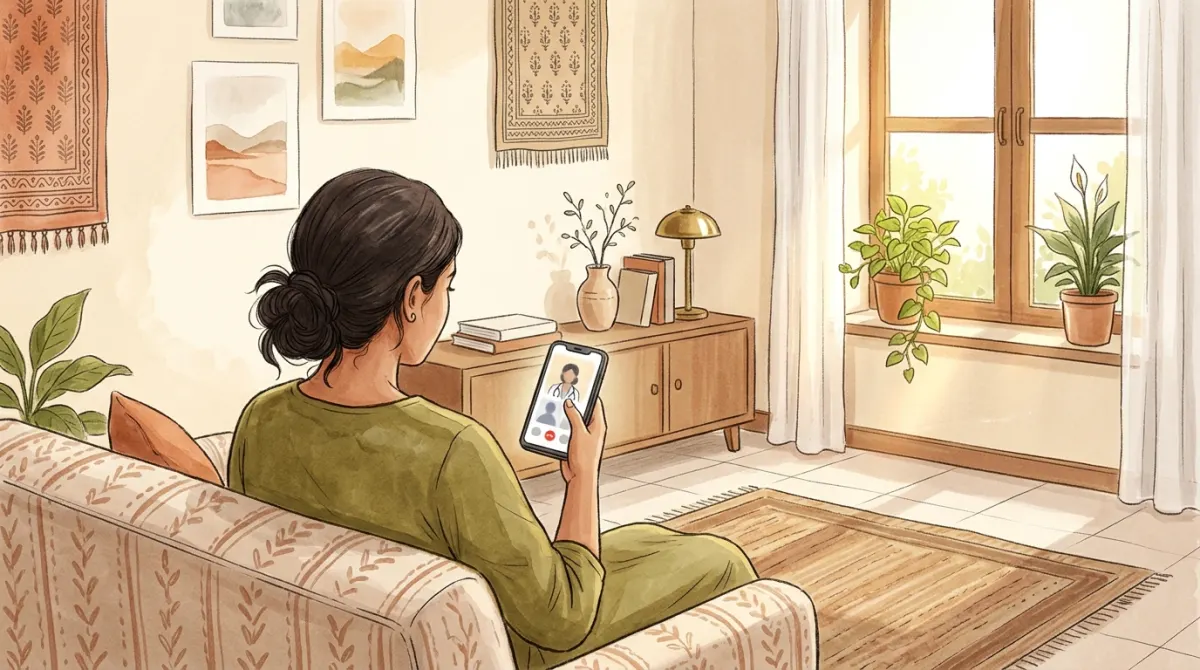
An online therapist for OCD is a psychologist who treats obsessive-compulsive disorder through scheduled sessions on video, audio or chat. OCD involves unwanted thoughts, called obsessions, and repeated behaviours or mental acts, called compulsions. When these get in the way of work, studies, sleep or relationships, it is time to speak to a professional.
The NHS says therapy for OCD is usually a type of cognitive behavioural therapy (CBT) with exposure and response prevention (ERP). In simple words, you slowly face the thing that frightens you. You then practise not carrying out the ritual that normally follows. A good therapist plans this with you at a pace you can manage.
OCD is not the same as liking things neat. Being tidy or organised is a preference. OCD brings distress and takes up a lot of time. It feels hard to stop, even when you know the worry is out of proportion. Many people hide it for years because they fear being judged.
OCD can be treated, and the right treatment depends on how much it affects your life. Mayo Clinic notes that treatment may not result in a cure, but it can help bring symptoms under control. Therapy helps teenagers, adults and children. If your child is struggling, see our online child psychologist page.
Should You See a Psychologist, Psychiatrist or Both for OCD?
Mayo Clinic notes that OCD often needs specialised care from a psychiatrist or psychologist.
How Does Online Therapy for OCD Work?
From the OCD cycle to ERP, hidden rituals, session numbers and privacy at home.
What Is the Obsession and Compulsion Cycle in OCD?
OCD usually follows a loop. An unwanted thought or image appears, anxiety rises, a ritual brings brief relief, and the thought returns stronger. Mayo Clinic notes common signs include feeling you must wash your hands, count things, or check things over and over. You might also have certain thoughts go through your mind repeatedly despite trying to ignore them. Having these thoughts does not make you a bad person.
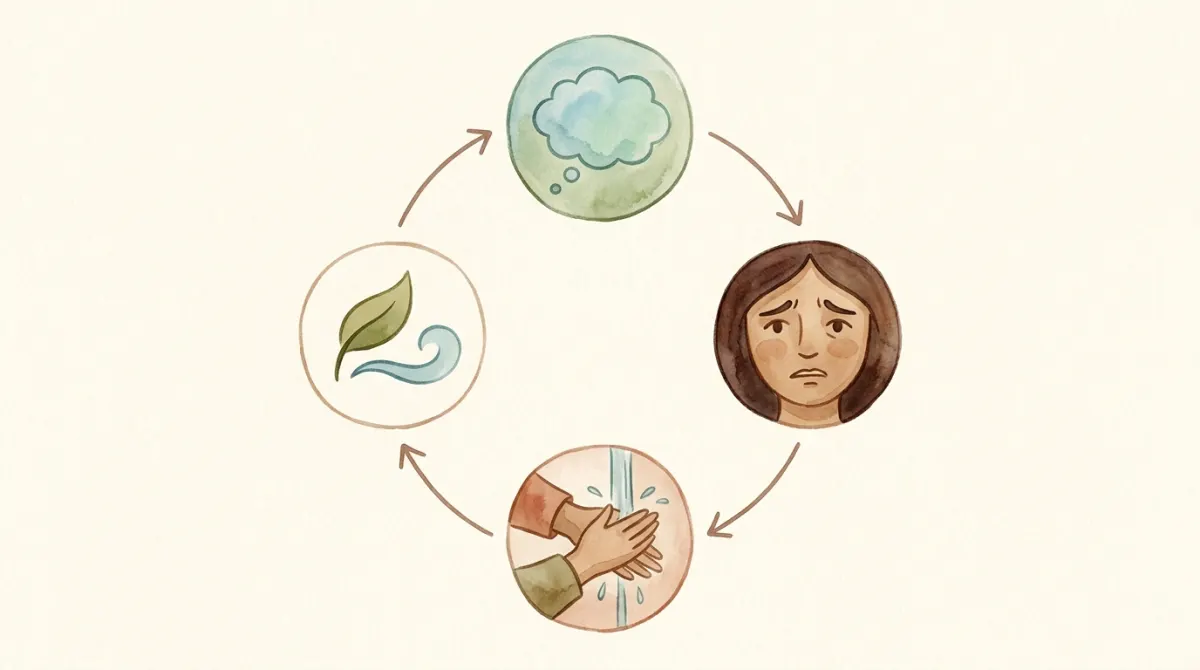
- Intrusive thought — An unwanted thought, image or urge appears without invitation.
- Distress — Anxiety or doubt rises, and it feels urgent to act.
- Compulsion — You wash, check, count, or perform a mental ritual.
- Brief relief — Relief comes, but it fades and the doubt returns, keeping the loop going.
Why Is ERP the Usual Approach to OCD Therapy?
Exposure and response prevention is the form of CBT the NHS names for OCD. In ERP, you and your psychologist list situations that trigger your fear. You then practise facing them in small steps while holding back from the compulsion. Many therapists ask you to rate your distress during practice. This helps you see how it rises and settles. Rituals and repeated checking give short relief but keep the cycle alive.
How Does Doing OCD Therapy Online Help?
OCD triggers live in ordinary places: the kitchen, the bathroom, or the study table. With video sessions, your psychologist can talk you through an exercise in the very space where the urge shows up. The NHS notes that exercises are done at home between sessions anyway. Online sessions also remove travel and waiting rooms, which can feel stressful. You can choose video, audio or chat, whichever feels most comfortable.
What If Your Intrusive Thoughts Are Hidden?
Some people experience OCD primarily as unwanted thoughts. Mayo Clinic notes that certain thoughts may go through your mind over and over, despite your trying to ignore them. Because nobody sees these internal struggles, the problem often goes unnoticed for a long time. These intrusive thoughts can feel distressing or hard to share. A psychologist hears such thoughts as symptoms of a clinical condition, not as a measure of your character. Your online sessions remain strictly private and confidential.
- Do certain thoughts repeat in your mind?
- Do you try to ignore them without success?
- Do these thoughts cause you distress?
- Do they get in the way of your daily life?
- Do you feel the need to hide them?
- Do you want professional, confidential help?
How Many Online Therapy Sessions Does OCD Need?
There is no single number. The NHS says people with fairly mild OCD usually need about 8 to 20 sessions of therapist treatment, with exercises done at home between sessions. More severe OCD may need longer, and some people combine therapy with medicines. The first sessions usually involve talking through your thoughts, feelings, symptoms and behaviour patterns. Progress depends a lot on regular practice between sessions. OCD can be a long-term condition, so staying in touch matters.
| Situation | What usually applies |
|---|---|
| Fairly mild OCD | About 8 to 20 therapist sessions, plus exercises at home (NHS) |
| OCD affecting life more strongly | Treatment is matched to impact; therapy may be longer or combined with medicines |
| Symptoms easing | Keep practising skills and book a review if old patterns return |
How Can You Ensure Privacy at Home?
Many Indian homes are shared, so privacy needs a little planning. Pick a time when the house is quiet and use headphones. Online consultations in India follow the Telemedicine Practice Guidelines 2020. These guidelines expect professional judgement about what is appropriate over a remote consultation. Families often want to help by giving constant reassurance. That is kindly meant, but it can sometimes keep the anxiety going. Your psychologist can guide how relatives can support you in a healthy way.
- Pick a quiet time slot
- Use headphones
- Close the door or find a private corner
- Keep your phone fully charged
- Write down your symptoms and triggers
- List all medicines and supplements you take
- Prepare questions for your psychologist
How Do You Book an Online Therapist for OCD?
Who You Will Speak To
Sessions on VinsHealth are taken by qualified psychologists from our own team. You can ask for your psychologist’s qualifications and registration details before your session.
Why Do People Choose Online Therapy for OCD?
Is Online OCD Therapy Available Across India?
Consultations are online and available in every city and town where you have a phone and internet connection.
Frequently Asked Questions About OCD Therapy Online
Sources and Further Reading
- Treatment - Obsessive compulsive disorder (OCD) — NHS
- Obsessive-compulsive disorder (OCD) - Diagnosis and treatment — Mayo Clinic
- Obsessive-compulsive disorder (OCD) - Care at Mayo Clinic — Mayo Clinic
- Telemedicine Practice Guidelines 2020 — MoHFW
- Department of Psychiatry - VMMC and Safdarjung Hospital — MoHFW
- Medical facts on this page come from 5 trusted sources (NHS, Mayo Clinic, MoHFW), listed under Sources.
- Drafted with AI assistance, then checked by a separate editorial review against those sources and Google’s guidelines for health content.
- Before publishing, an independent fact-check by a different AI system compared the numbers and medical claims with the sources, the source links were tested, and the text was checked for originality.
- Not yet reviewed by a doctor. Reviewed pages show the reviewer’s name and registration number at the top.
- No doctor names, ratings or patient numbers are shown unless they are real and can be checked. Spotted a mistake? Write to us and we will correct it.
This page gives general information about mental health and counselling. It is not a diagnosis or a substitute for an in-person assessment. If you are in danger, call 112 or Tele-MANAS 14416. Last updated: 8 November 2026.
Are You Ready to Take the First Step Toward Calmer Days?
Talk to a psychologist about your OCD, privately and at a fixed fee of ₹500. Results vary, but a first conversation is a real start.