Skip to Main Content
🔒 Private🎥 Video, audio or chat🕑 10 AM-6 PM

Teenager Counselling Online
with a Psychologist, Private Sessions for ₹500

For parents who are worried about a teen's mood, school stress or silence, and for older teens who want to talk to someone outside the family. Choose video, audio or private chat, and a psychologist will listen first. Sessions run from 10 AM to 6 PM, and you are usually connected within 1 hour of payment.

📚 Exam stress😢 Low mood💬 Family conflict📱 Social media👥 Friendship problems😴 Sleep and appetite
₹500
Per consultation
1 hr
Usual time to connect
10–6
Daily hours
3 ways
Video, audio or chat
Book a Psychologist Consultation
Connects within 1 hour · 10 AM to 6 PM · Confidential
🔒 Privacy note: What you share is used only to arrange your consultation and is not shared without your consent.
Consultation Fee
₹500
10 AM to 6 PM rate
🔒 Confidential· Emergencies: call 112
Request received
Please complete payment to confirm your consultation.
Private & confidential
Nothing shared without consent
Qualified professionals
Ask for registration details any time
Video, audio or chat
From anywhere in India
Fixed fee ₹500
Shown before you pay
When to get urgent help
If your teen talks about self-harm, seems in danger, or may hurt someone else, do not wait for an online slot. Call 112 or go to the nearest hospital. Tele-MANAS 14416 is a free 24x7 government helpline. If your teen lashes out, put safety first and call the police if leaving the room does not help.
🧑 Online teen counselling

What Is Teenager Counselling Online and Who Is It For?

Teenager counselling online is a private talking-therapy session between a teen and a psychologist over video, audio or chat. It helps with worries, low mood, school pressure and family stress. Psychologists do not prescribe medicines. At VinsHealth, one consultation costs ₹500, and a parent or guardian can be involved.
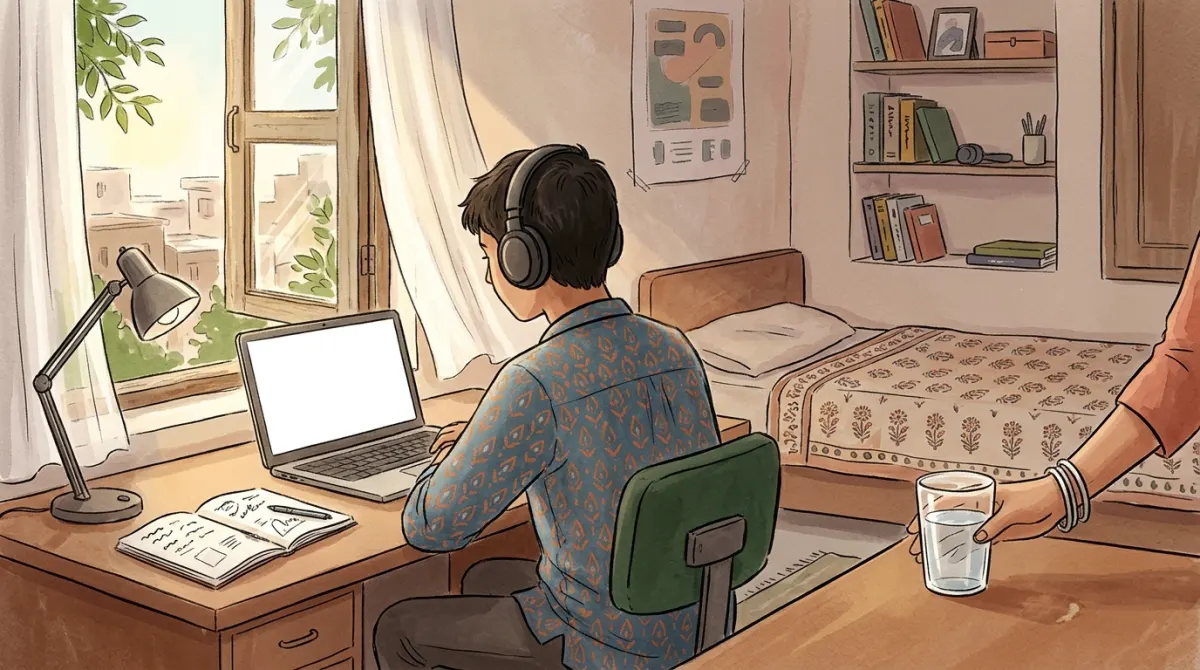
Teenager with headphones at a desk in a calm room, ready for an online counselling session
Sessions can be held from home, in the mode your teen finds most comfortable.

Teenager counselling online is a private conversation between a teen and a psychologist, held by video, audio or chat from home. It suits teens who are struggling with feelings, school, friendships or family life. Mayo Clinic describes counselling as a place to talk with a trusted, neutral confidante and work towards solutions. It is not only for crises. It can also be extra support when life feels heavy.

Teens are no longer small children, and they are not yet adults. Many want to be heard, not managed. That is why adolescent counselling relies mainly on conversation, and why the teen gets a say in how the session happens. A camera-shy teen can start with audio or private text chat. A teen who is more comfortable face to face on screen can choose video. Doing it from their own room removes travel, waiting rooms and the fear of being seen. Bilingual support in Hindi and English is also available.

The National Mental Health Survey of India 2015-16 reported a 7.3% prevalence of mental morbidity among adolescents. Rates were similar for boys and girls, but higher in urban metro areas. The same survey found that the treatment gap for mental disorders ranged between 70 and 92% for different disorders. In plain words, many young people who need help do not receive it. Starting with one conversation is a reasonable first step.

The aim of therapy, according to Mayo Clinic, is to help teens regain a sense of happiness and control. It helps them find better ways to cope and solve problems. It also builds resilience. Results differ from one teen to another, and no honest professional can promise a quick change. What a psychologist can offer is a calm, structured space and practical tools. This page is for teens aged 13 to 19. For younger children, see our online child psychologist page.

Quick Facts: Online Teen Counselling at VinsHealth
Format
Video, audio or private chat, chosen for the teen's comfort.
Timings
Consultations run from 10 AM to 6 PM.
Fee
One fixed fee of ₹500 per consultation.
Connection
Usually connected within 1 hour of payment.
Who you see
A psychologist, who offers talk therapy and does not prescribe medicines.
Not for emergencies
For immediate danger call 112 or Tele-MANAS 14416.
🤝 Who can help

Psychologist, Counsellor or Psychiatrist: Who Should Your Teen See?

Each professional does a different job. Here is a simple way to choose.

Psychologist
Right when your teen needs to talk through worries, mood, stress or behaviour. Psychologists offer talk therapies such as CBT. They cannot prescribe medicines. For most things that affect young people, therapy is the first line of treatment, as paediatric mental health experts note.
Counsellor
A good fit for everyday challenges such as school pressure, friendship problems or family changes. Counsellors also use talk-based support and cannot prescribe medicines. Ask about training and the kind of issues they usually work with.
Psychiatrist or doctor
A medical doctor who can diagnose and, where needed, prescribe medicine under India's Telemedicine Practice Guidelines 2020. Your teen may be referred here if talk therapy alone is not enough. See our psychiatrist consultation page. Medicines are only on a doctor's prescription.
Helpline or hospital
For immediate danger, self-harm thoughts or violence, a scheduled online session is not enough. Call 112, go to the nearest hospital, or call Tele-MANAS 14416, the free 24x7 government helpline.
📝 Inside the sessions

What Teen Counselling Looks At, and How It Works

Signs to watch, common pressures, methods, privacy and what the first session is like.

Section 01 of 7

What Are the Signs Your Teenager May Need to See a Psychologist?

Mood swings and slammed doors are common at this age. What matters is a change that lasts, spreads into daily life, or worries you. Mayo Clinic lists warning signs such as unusual restlessness or worry. Look out for losing interest in things that once brought pleasure. Major changes in appetite, and feelings of guilt, agitation or sluggishness are also signs. A drop in school performance or pulling away from friends can also be a signal. Only a professional can tell what is behind these signs. A first conversation is often the best way to find out.

  • Your teen seems low or irritable most days, not just now and then
  • They have stopped enjoying things they used to love
  • Sleep or appetite has changed noticeably
  • They avoid school, friends or family more than before
  • Marks or concentration have fallen suddenly
  • They seem very worried, restless or guilty
  • There are angry outbursts or risky behaviour
  • They say things that sound hopeless (seek urgent help)
Signs worth noticing
Lost interest in hobbies or friends
Constant worry or restlessness
Major changes in appetite
Guilt, agitation or feeling slowed down
Sudden drop in school performance
Hopeless talk or aggressive outbursts
Good to Know
A psychologist's first step is usually an evaluation: talking about thoughts, feelings and behaviour, sometimes with a questionnaire. It is a conversation, not a test your teen can fail.
Section 02 of 7

How Can Online Counselling Help with Exam Stress and School Pressure?

School-related problems are one of the everyday reasons young people seek counselling. In India, board exams, entrance tests such as JEE and NEET, and family expectations pile up quickly. Students in coaching hubs like Kota or Hyderabad face intense pressure. A teen may fear failure, put off studying, or feel unable to switch off. A psychologist helps your teen say these fears aloud. They look at driving thoughts and build a routine that fits. Counselling supports the teen. It is not a promise of higher marks, and results vary.

What teens can work on
Fear of failure and perfectionism
Putting off study and then panicking
Sleep, rest and a realistic study routine
Talking about family expectations calmly
Feeling worn out or unable to concentrate
Worries about choosing a stream or career
Good to Know
If stress is the main issue, our online counselling for stress page explains more. Worry that feels constant may also be anxiety, covered on our online therapist for anxiety page.
Section 03 of 7

How Do Psychologists Address Cyberbullying and Social Media Stress?

Teen life now continues on phones after school ends. Comparing oneself with others online or being left out of a group chat hurts. Breakups and unkind messages also affect how a teen feels. Many teens find it easier to talk about these things with someone outside the family. A psychologist can listen without taking sides and help your teen think about what to do next. If your teen is being threatened online, keep screenshots and make sure a trusted adult knows.

Topics your teen can bring
Feeling left out or excluded
Online harassment or unkind messages
Comparing looks or lives on social media
Peer pressure and saying no
Breakups and friendship fallouts
Too much time on screens
Good to Know
Taking away the phone rarely solves the underlying hurt. Staying calm and curious usually helps your teen open up more than a lecture does.
Section 04 of 7

What Evidence-Based Therapeutic Approaches Do Psychologists Use for Teens?

Psychologists use talk therapies. A common one is Cognitive Behavioural Therapy (CBT), which looks at how thoughts, feelings and actions connect. If a therapist uses CBT, expect homework between appointments. Therapy works best with active participation. Your psychologist may also teach simple relaxation and coping skills. Mayo Clinic notes that for most things that affect children, therapy should be the first line of treatment. For teen depression, a combination of talk therapy and medicine can be very effective. Medicines are only on a doctor's prescription.

What to expect from therapy
Talking through thoughts, feelings and behaviour
Practical skills to try between sessions
Homework if CBT is used
Referral to a doctor if medicine may help
Therapy first for most issues
Alternative remedies are no substitute for therapy
Good to Know
Mayo Clinic advises not to replace conventional treatment or psychotherapy with alternative medicine. When it comes to depression, alternative treatments are not a good substitute for medical care.
Section 05 of 7

How Do We Balance Teen Confidentiality and Parental Involvement?

Teens open up when they trust that their words will not be repeated. Parents, meanwhile, want to know their child is safe. Both needs can be respected. In Indian joint families, finding privacy can be hard, but it is essential for therapy. At the start, ask the psychologist what stays private and what will be shared with parents. Younger teens are usually booked by a parent or guardian. Parents can ask for general guidance on how to support their child. The exception is safety. If a teen is at risk of self-harm or hurting someone, safety comes first. Family or emergency services must be involved.

Good ground rules
Ask about privacy in the first session
Agree how and when parents get updates
Teen shares details only if comfortable
Safety risks are never kept secret
Parents get guidance, not a session transcript
Under 18: parent or guardian is involved in booking
Good to Know
Teens aged 18 and above can book for themselves. Under 18, talking to a parent is the safest route. Our psychologists cannot promise to keep a risk to your teen's life secret.
Section 06 of 7

What Happens in an Online Teenager Counselling Session?

A first session is mostly about getting to know your teen and understanding the problem. Nobody will be pushed to say more than they want to. Mayo Clinic advises preparing a short list beforehand. Include any symptoms your teen has had and key personal information. Add questions you both want to ask. Include any medicines your teen takes. Keep to a quiet, private room with a good internet connection. Use headphones if possible.

  1. Book and pay — Choose your preferred mode, share a short note about the concern, and pay the fixed fee of ₹500.
  2. Get connected — You are usually connected within 1 hour of payment, between 10 AM and 6 PM.
  3. Talk with the psychologist — They ask about background, feelings and goals, then listen to what your teen wants to say.
  4. Plan the next steps — You get practical suggestions, ideas to try, and advice on follow-up or referral if needed.
Session flow
Book and pay online
Connect by video, audio or chat
Share background and concerns
Leave with next steps
Good to Know
Not wanting to go to therapy does not always mean something is wrong. Mayo Clinic notes that good therapy can feel a little unpleasant because it pushes you to try something new.
Section 07 of 7

How Can Parents Support a Teenager in Counselling?

Therapy solves problems and also helps build resilience, but home matters too. Stay calm and avoid asking about every session. Tell your teen you are there when they want to talk. If a conversation turns into an argument, step away and return later. If your teen lashes out, safety comes first. NHS guidance says that if leaving the room or house does not help, call the police. Keep expectations gentle. Change usually comes in small steps.

Helpful things to do
Listen first, advise later
Do not demand details of sessions
Support homework without policing it
Keep routines for sleep and meals
Stay calm during arguments
Seek urgent help for any safety risk
Good to Know
A teen who resists therapy at first is not necessarily a sign that it is not working. Give it a fair try and keep the door open.
🎯 How It Works

How to Book Online Teenager Counselling in 4 Steps

Share the concern
Tell us briefly what is troubling your teen and pick video, audio or chat.
Pay the fixed fee
One consultation fee of ₹500, with no subscription to sign up for.
Get connected
You are usually connected within 1 hour of payment, between 10 AM and 6 PM.
Talk and plan
Speak with the psychologist and leave with clear next steps and follow-up advice.
👥 Our Team

Who You Will Speak To

Sessions on VinsHealth are taken by qualified psychologists from our own team. You can ask for your psychologist’s qualifications and registration details before your session.

Qualified psychologists
Postgraduate training in clinical or counselling psychology.
Same psychologist each time
Follow-up sessions stay with the person who knows your story.
Private by default
What you share is used only for your care.
✨ Why families choose online

Why Families Choose Online Counselling for Teenagers

From your own room
No travel, waiting rooms or being seen by neighbours. Teens often speak more freely in a familiar space.
Mode of their choice
Video, audio or private chat lets a shy or anxious teen begin in the way that feels safest.
One clear fee
A fixed ₹500 per consultation, so you know the cost before you start.
Parents included, respectfully
Parents can be part of the plan while the teen's own space is respected.
Honest about limits
We are not an emergency service. In a crisis, we point you to 112 and Tele-MANAS 14416.
📍 Across India

Online Teenager Counselling Across India

Consultations are online and available in every city and town where you have an internet connection.

Delhi NCR
Online consultations
Mumbai
Online consultations
Bengaluru
Online consultations
Hyderabad
Online consultations
Chennai
Online consultations
Kolkata
Online consultations
Pune
Online consultations
Kota
Online consultations
Ahmedabad
Online consultations
Jaipur
Online consultations
Lucknow
Online consultations
Chandigarh
Online consultations
Indore
Online consultations
Patna
Online consultations
Nagpur
Online consultations
❓ FAQ

Frequently Asked Questions About Online Teen Counselling

Under 18, a parent or guardian is generally involved in booking and consent, so the safest route is to talk to a trusted adult first. Teens aged 18 and above can book for themselves. Whatever the age, ask the psychologist what stays private and when safety may need to be shared.
Look for changes that last: constant worry or restlessness, loss of interest in things once enjoyed, big changes in appetite, guilt or agitation, falling school performance, or hopeless talk. Only a professional can say what is behind them. If there is any talk of self-harm, seek urgent help.
At VinsHealth, one consultation costs ₹500, a fixed fee with no subscription. Fees elsewhere vary, and there is no official price list for private psychologists, so check the fee before you book.
You book and pay, choose video, audio or chat, and connect with a psychologist within 10 AM to 6 PM. The student talks about concerns such as school stress, friends or mood. The psychologist suggests next steps. A quiet room and headphones help.
They listen, ask about thoughts, feelings and behaviour, and may use a short questionnaire. They then use talk therapies such as CBT to build coping skills. If CBT is used, expect homework between appointments. They do not prescribe medicines.
No, psychologists provide talk therapy only. A psychiatrist or other registered doctor can prescribe medicines when appropriate, following India's Telemedicine Practice Guidelines. Mayo Clinic notes that therapy is the first line of treatment for most things that affect young people.
This varies with the concern and the teen, and nobody can honestly promise a set number or a cure. Your psychologist can give a sense of what to expect after understanding the situation. Therapy works best when the teen takes part actively.
Not wanting to go is not always a sign that something is wrong. Good therapy can feel a little unpleasant at first. Offer choices, such as chat or audio, and avoid forcing the issue. Staying calm and open usually helps more than pressure.
Write down symptoms you have noticed, key personal information such as school and family changes, any medicines your teen takes, and questions you both want to ask. Find a quiet, private spot and test your internet and headphones beforehand.
No, VinsHealth is not an emergency service. If your teen is in danger of self-harm or may hurt someone, call 112 or go to the nearest hospital. Tele-MANAS 14416 is a free 24x7 government helpline, also reachable on 1800-89-14416.
This page is aimed at teens aged 13 to 19. For younger children, our online child psychologist page is a better fit, as the approach to younger children is different.
🔍 How This Page Was Checked
  • Medical facts on this page come from 5 trusted sources (Mayo Clinic, Mayo Clinic Press, NHS, MoHFW), listed under Sources.
  • Drafted with AI assistance, then checked by a separate editorial review against those sources and Google’s guidelines for health content.
  • Before publishing, an independent fact-check by a different AI system compared the numbers and medical claims with the sources, the source links were tested, and the text was checked for originality.
  • Not yet reviewed by a doctor. Reviewed pages show the reviewer’s name and registration number at the top.
  • No doctor names, ratings or patient numbers are shown unless they are real and can be checked. Spotted a mistake? Write to us and we will correct it.

This page gives general information about mental health and counselling. It is not a diagnosis or a substitute for an in-person assessment. If you are in danger, call 112 or Tele-MANAS 14416. Last updated: 8 November 2026.

Give Your Teen a Safe Place to Talk

Book a private session with a psychologist for ₹500. Choose video, audio or chat, and start with a conversation.

🔒 Private₹500 fixed fee⏱ Connects within 1 hour